Muddy Waters - Muddy Waters at Newport Chess, 1960
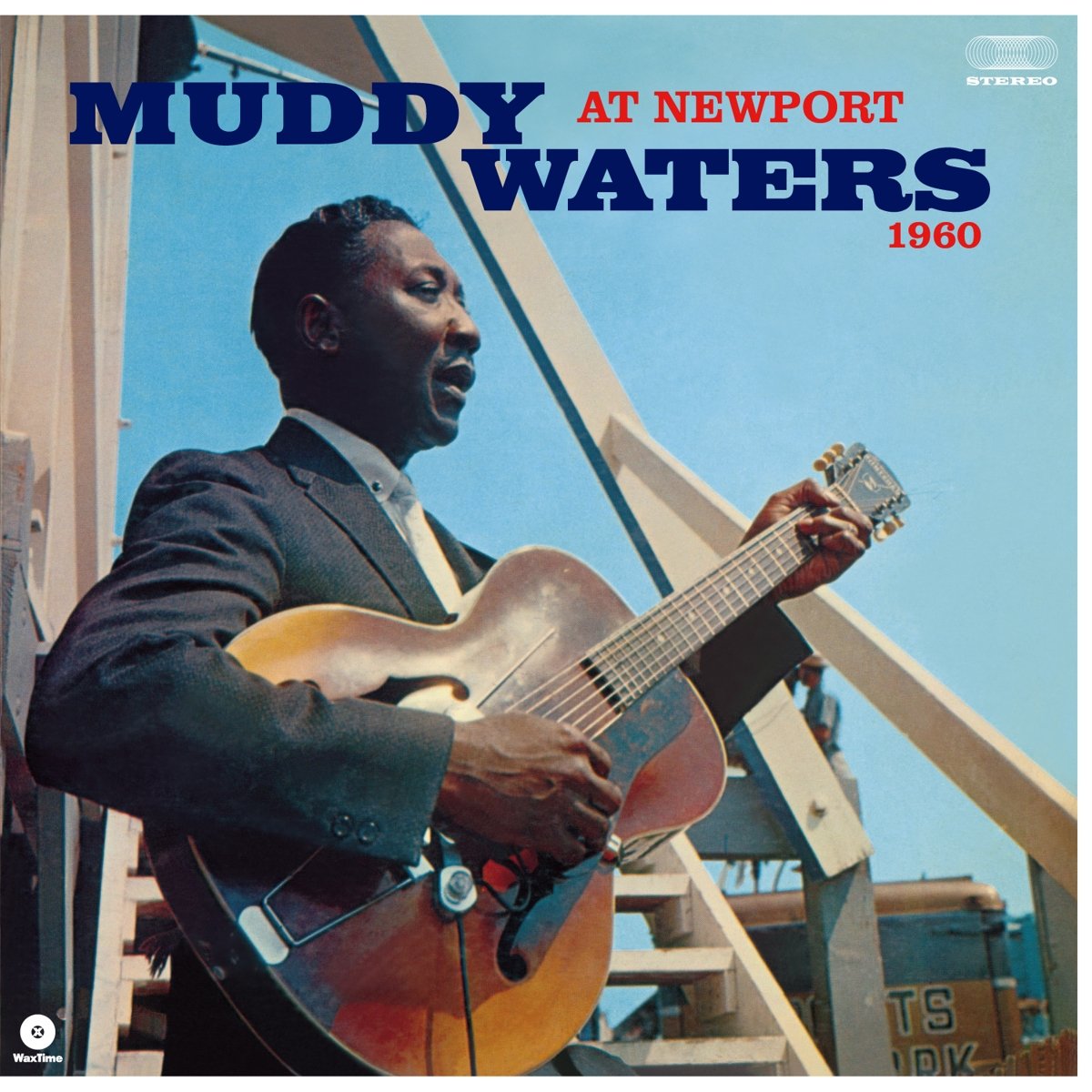
One of this book's big shortcomings is that by starting at the end of the 1950s it pretty much skirts blues music. As a result there are a few blues records and they tend to be these career retrospective types like Muddy Waters at Newport. Considering how influential blues was to the formation of American Rock and Roll music, it seems odd that you have a late career John Lee Hooker (save his 1989 album The Healer), a BB King live album, no Howlin' Wolf, no Robert Johnson, no Lead Belly. I get starting this book at a definitive point--the point where the idea of The Album really starts taking hold--but I feel like this thing at least needs a prologue, especially considering how many times Eric Clapton shows up in it.
Alas, at least this Muddy Waters record was included. These live albums from the 50s and 60s have been some of my favorites to listen to over the course of this project. This one is particularly good because these songs benefit from being roughed up. You get a lot more life out of them than if they'd been pristinely recorded in a studio.
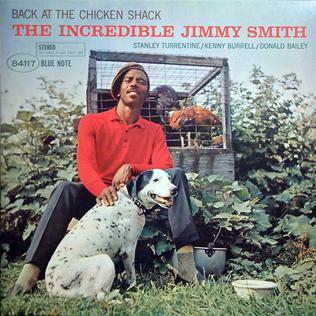
Jimmy Smith - Back at the Chicken Shack Blue Note, 1960
While I absolutely love this album's groundbreaking use of the Hammond organ, the album's cover has instantly slotted in to my all time Top Whatever. I love how straight forward it is! I love that bright red shirt. I love the literal chicken shack. I love that good boi sitting there for pets. Smith sets himself apart from a crowded field of jazzmen (remember, Jazz is none of my business) and creates a sound with a surprising amount of swagger. Dude made the organ cool. That's a feat on its own, but this was one of the most pleasant surprises I've come across in the book so far. An album I've put on a couple times already when I needed something to cook dinner to.
The Everly Brothers - A Date with the Everly Brothers Warner Bros, 1960
When I first listened to this album, I thought, man, this would never fly today. But then I remembered there's a Kidz Bop version of Pitbull's "Timber" which boasts the line "Let's make a night you won't remember/ I'll be the one you won't forget." It's amazing how many date rapey lines are littered throughout the Kidz Bop canon. And so, the Everly Brothers version of Pure Patriarchal Romance is kind of quaint. That is, unless you adjust for romantic inflation. Check out the second verse:
One day soon you'll have a date
And you'll take her home that night
You'll wonder as you look at her
Would a kiss be right
The more you look, the more you'll find
Those doubts will fill your head
But think real hard and you might recall
The things your old dad said
Girls, girls, girls were made to love
Maybe dear old dad should have taught these brothers a thing or two about consent! I'd say you adjust for inflation, that's as bad or worse than Pitbull. Girls weren't made to have their own fulfilling lives with their own dreams and goals, they were MADE TO LOVE, DAMNIT! Another problem with this song is that it's damn catchy. This album also has the first recorded version of "Love Hurts," which I love not because of the hair metal cover by Nazareth, but Bob Pollard and Kim Deal's rendition. It also has "Cathy's Clown," which is one of my all time favorite oldies. Sonically you can hear the influence they're going to have on countless pop-rock bands going forward into the 60s, but lyrically you can...also hear the influence they are going to have on countless pop-rock bands going forward (particularly the early Beatles which I sense are coming soon).
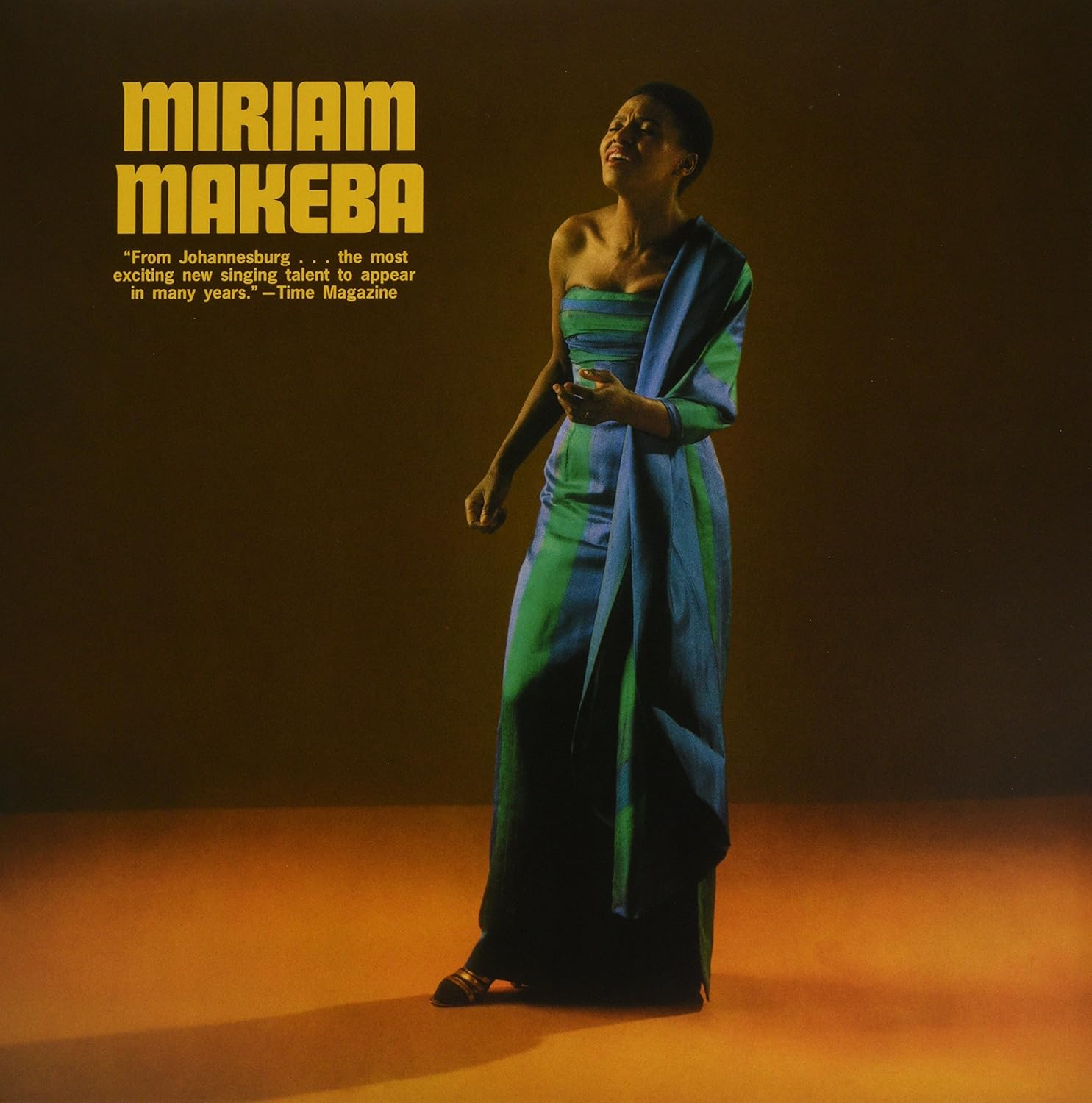
The second Miriam Makeba started singing, I realized precisely where tUnE-YaRdS copped her sound from. Makeba's vocals go right for your soul without hesitation. Goddamn can this woman sing. Now imagine hearing that in 1960 with some of the post-war whitewashing starting to erode. Gorgeous stuff.
I love the mental image of Elvis getting back from the Army and immediately being shoved into a recording studio. Elvis isn't my personal favorite, but his influence among soulful white boys of a certain age is hard to ignore. One of my favorite things about this particular album is how thrown together it feels. That's a feature not a bug. It feels natural, not overproduced. Considering how hungry the adoring public was for new Elvis, the bar was pretty low, and it feels like The Pelvis and his crew went above and beyond to deliver an album that is a lot more fun than it needed to be.
Finally out of the 50s! And what better way to inaugurate the 60s than to capture some of that folksinger spirit with Joan Baez's debut. Her voice is sublime, but you know that already. That said I can make it about four songs before needing to take a break. Maybe that's why I've never listened to a Joan Baez record all the way through. She's excellent here or there, but so much vocal quavering starts to wear on me after a while. Still, there are some great tunes here, particularly "Silver Dagger."
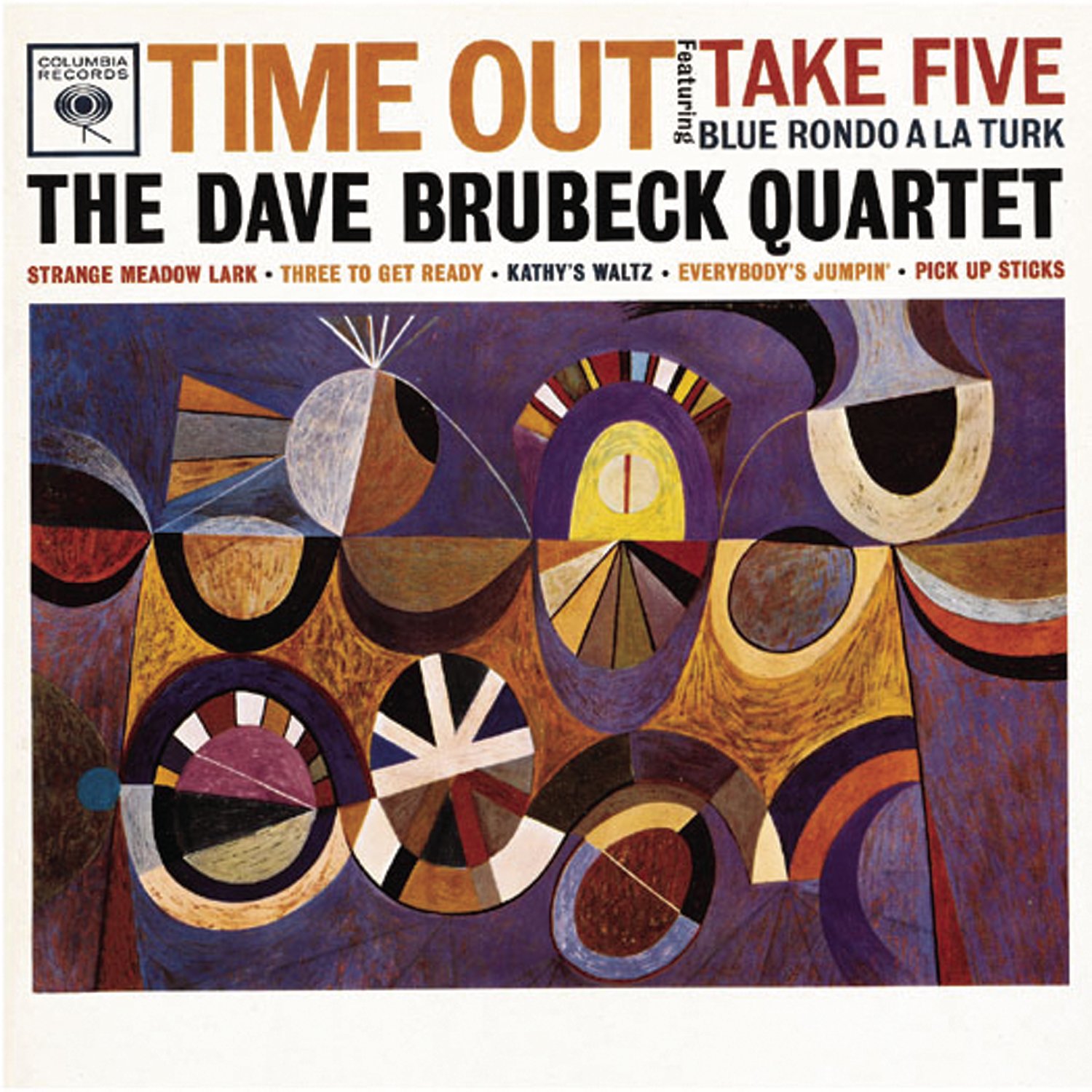
The Dave Brubeck Quartet - Time Out Columbia, 1959
I can't listen to this album without recalling one of the most cringeworthy experiences I was ever party to. I went to a small cocktail party (ung) with my buddies at the apartment of some people I didn't know. I sat in a corner most of the time and watched these two hipster dudes pick the music, and vividly remember them putting on this album. It's about as far as you can get from Kind of Blue. Everything about this is clean and precise and perfect, and maybe that's why my initial impression is, "It's fine." I get why it's good, the technical proficiency can't be argued, but there's just something missing. But, remember what I said: I'm the last person you want giving you advice about Jazz.
Marty Robbins - Gunfighter Ballads and Trail Songs CBS, 1959
I liked this one WAY more than I thought I was gonna. Everyone knows "El Paso," but I was expecting something cornier. There's a certain novelty quality to these cowboy songs, but the way Robbins sells them is masterful. What could be hokey is perfectly marries the time it comes from and the time it is trying to capture. The Robbins' penned tunes--"Big Iron," "El Paso," "The Master's Call," "In the Valley"--are unsurprisingly the most interesting/compelling tracks on the record. "Big Iron" in particular.
Jazz isn't really any of my business. It's a genre I appreciate from the sidelines but lack the music brain to provide a legitimate judgement. I'm assuming all of the jazz records on this list are exceptional. Where I've basically spent the last 20 years trying to shout my opinions about music from the rooftops, I'm perfectly happy to take someone else's word for it here. Despite my lack of music knowledge, I know that having Miles Davis, John Coltrane, Cannonball Adderley, and Bill Evans all playing together is music magic. This record just stops you in your tracks. You can tell that if you google Greatest Jazz Records of All Time this is gonna be the first one that pops up. Try it.
Ray Charles - The Genius of Ray Charles Atlantic, 1959
There's something absolutely timeless about Ray Charles' voice. So many of the albums on this list so far are very much of their time. The huge orchestrations on this album are of their time, sure, but if you strip all of that away and leave only Charles' voice, you've got something that is purely universal.